24/7 emergency response · metro Atlanta
Mold remediation for Atlanta's basements, crawlspaces & attics
Atlanta pairs a long humid season with the housing that traps it — basements below grade, crawlspaces under intown bungalows, attics over tight new construction. Mold finds the damp spot; we remove the growth, contain the spread, and fix the moisture that fed it.
What's involved
What we do
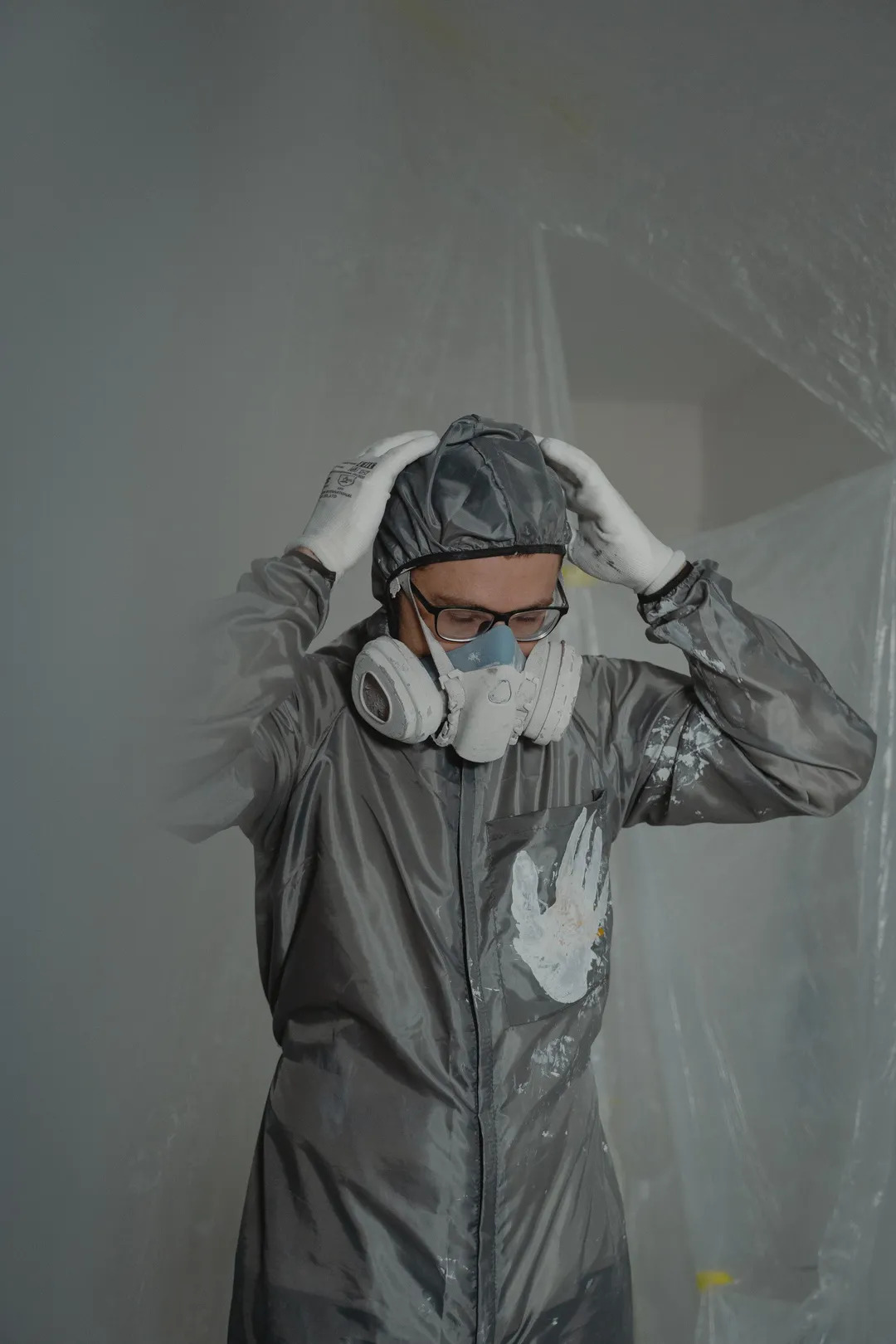
- Containment with negative air and HEPA filtration before anything is disturbed
- Removal of unsalvageable material; cleaning and treatment of what stays
- The moisture-source fix written into the scope — removal alone is temporary
- Drying confirmed with meter readings before anything gets closed up
- Finished basements opened only as far as the moisture actually went
- Basement, crawlspace, and HVAC growth handled — where Atlanta mold actually lives
Locally, this is the single most-searched restoration service in the Atlanta area.
We serve Atlanta, Sandy Springs, Marietta, Decatur, Smyrna, Roswell and the rest of metro Atlanta. Same-region crews, no long waits for someone to drive in.
See all service areas → What it costs in 2026 →In plain terms
Where Atlanta mold actually starts
Almost none of it starts as mold. It starts as water taking the path the ground gives it, and around here that ground is Piedmont clay — dense, slow to drain, and happy to hold rainwater against a foundation wall instead of letting it soak away. Add the tree canopy this city is known for: shaded roofs and north walls dry slowly, and gutters filling with leaves every autumn quietly redirect a roof's worth of water to the base of the house. That water ends up in the lowest conditioned space you own. In metro Atlanta that's usually a basement, which is why mold here behaves nothing like mold in a slab-built or coastal house — it concentrates below grade, on the cool side of walls, where summer air condenses against masonry that never really warms up. Intown bungalows shift the same problem into the crawlspace; tighter newer builds push it up into attics and duct runs instead.
Finished basements: why it's usually bigger than it looks
A finished basement is the hardest version of this job, and the most common one we're called for. Framing, insulation and drywall sit tight against below-grade walls, so growth starts on the back of the assembly and reaches the room last — by the time there's a visible spot or a smell that won't leave, the wall cavity has usually been damp for a while. That's also why the honest answer to "can you just treat the spot?" is often no. What we can promise is that opening it up is governed by where the moisture actually went, verified with a meter, not by whichever number makes the invoice bigger. Removal stops at the boundary the readings justify, and you get told what that boundary is before anybody cuts.
The part that decides whether it comes back
Containment, HEPA filtration, removing what's colonized, cleaning what isn't — that sequence is standard, and any competent company will do it. The step that separates a repair from a rerun is the water. If the grading still slopes toward the house, the downspouts still discharge at the foundation, the gutters still clog, or the basement still runs at summer humidity with no dehumidification, the growth has been removed but nothing has been solved. So our scope names the source and how it gets corrected, and drying is signed off on meter readings rather than a date. Sometimes that fix is ours and sometimes it's a grading or plumbing contractor's — either way you should see it written down, because a remediation that ignores the water is a subscription, not a repair.
How it works
A clear process, start to finish
Call or request a callback
Tell the line what happened and where. Water and storm events run as emergencies — the clock matters in this climate.
Assessment on site
Moisture readings, photos, and a written scope of what needs to happen — before any work begins, so nothing surprises you.
Mitigate & restore
Containment, extraction, drying, removal — the right sequence for the loss, documented step by step as we go.
Insurance squared away
Documentation formatted the way adjusters expect it, and direct coordination with your carrier on covered claims.
Straight answers
Mold Remediation questions we hear most
Do I need a mold test first, or can removal just start?
If you can see the growth, testing rarely changes anything — EPA guidance says sampling is generally unnecessary when mold is visible, because the remedy doesn't depend on the species. Where testing earns its fee: a musty smell with no visible source, a landlord or real-estate dispute that needs third-party paper, or a doctor's request. In those cases use an independent tester — not the company bidding the removal.
The mold is in the basement. Why does it keep returning after I clean it?
Because basements sit at the bottom of the moisture problem — Georgia clay sheds rainwater toward foundation walls, humid summer air condenses on cool below-grade surfaces, and any slow leak drains to the lowest floor. Scrubbing the wall removes this month's growth; correcting the water path and the humidity is what ends the cycle, and that fix belongs in any legitimate remediation scope.
Is Georgia mold work licensed?
No — Georgia has no state license for mold assessment or remediation, so anyone can print the word on a truck. Vet the work instead: ask how containment will be set, what happens to the moisture source, whether drying gets verified with meter readings, and get the scope in writing before work starts.
Is it black mold?
Nobody can tell you that by looking, and anyone who does is guessing — dark growth is common and mostly unremarkable, and a lab is the only thing that identifies a species. It also wouldn't change the plan: contain it, remove what's colonized, fix the water. If a company leads with the phrase to move you toward a bigger number, that tells you more about the company than about your basement.
How long does mold remediation take?
Tear-out is the quick part; waiting on the drying is what you actually schedule around. One contained area can be finished and dry inside a few days. A finished basement — framing and insulation to open, then a wall assembly that has to dry from the inside out — commonly pushes into a second week. And where the genuine fix is regrading or a plumbing repair, that trade sets the outside date, not us. You'll get meter readings instead of a promise.
What about mold in the attic?
That's usually a ventilation and air-sealing problem wearing a mold costume: warm damp air leaking up out of the living space, condensing on cold sheathing in winter, sometimes helped along by a bath fan venting into the attic instead of outside. Treating the sheathing without correcting the air path just resets the clock. It shows up more in tighter newer construction than in older intown houses.
Can we stay in the house while you work?
Usually yes — and a basement is the easiest case of all, because containment seals the work away from the floors you actually live on. The exceptions are worth naming early rather than late: growth that has moved into the HVAC system and can travel the ductwork, a footprint big enough that containment swallows the main floor, or a household member whose symptoms flare whenever material gets disturbed. You'll hear about any of those before the plastic goes up.
Will insurance cover it?
That turns on the cause rather than on the mold. A sudden covered failure — a supply line, a water heater, a washing-machine hose — often brings mold coverage along with it, but Georgia policies commonly carry a separate mold sublimit, and it is frequently smaller than the job. Seepage through a foundation wall, grading that was always wrong, or ordinary summer humidity generally sits outside coverage entirely. Pull the policy and look for that sublimit specifically, and photograph conditions before anyone touches them.
Get help fast
Tell us what happened
Water, mold, fire, or storm damage — send a few details and we'll call you back to assess it. For active emergencies, calling is fastest: (678) 247-2393.
- 24/7 emergency response for water & storm emergencies
- We document everything for your insurance claim
- Serving all of metro Atlanta
What happens when you reach out
- Tell the 24/7 line (or this form) what happened and where — two minutes.
- We call you back fast to talk it through and set the on-site visit.
- Assessment first, in writing — work starts only when you say go.